Guide to Developing Offshore Conservation Areas
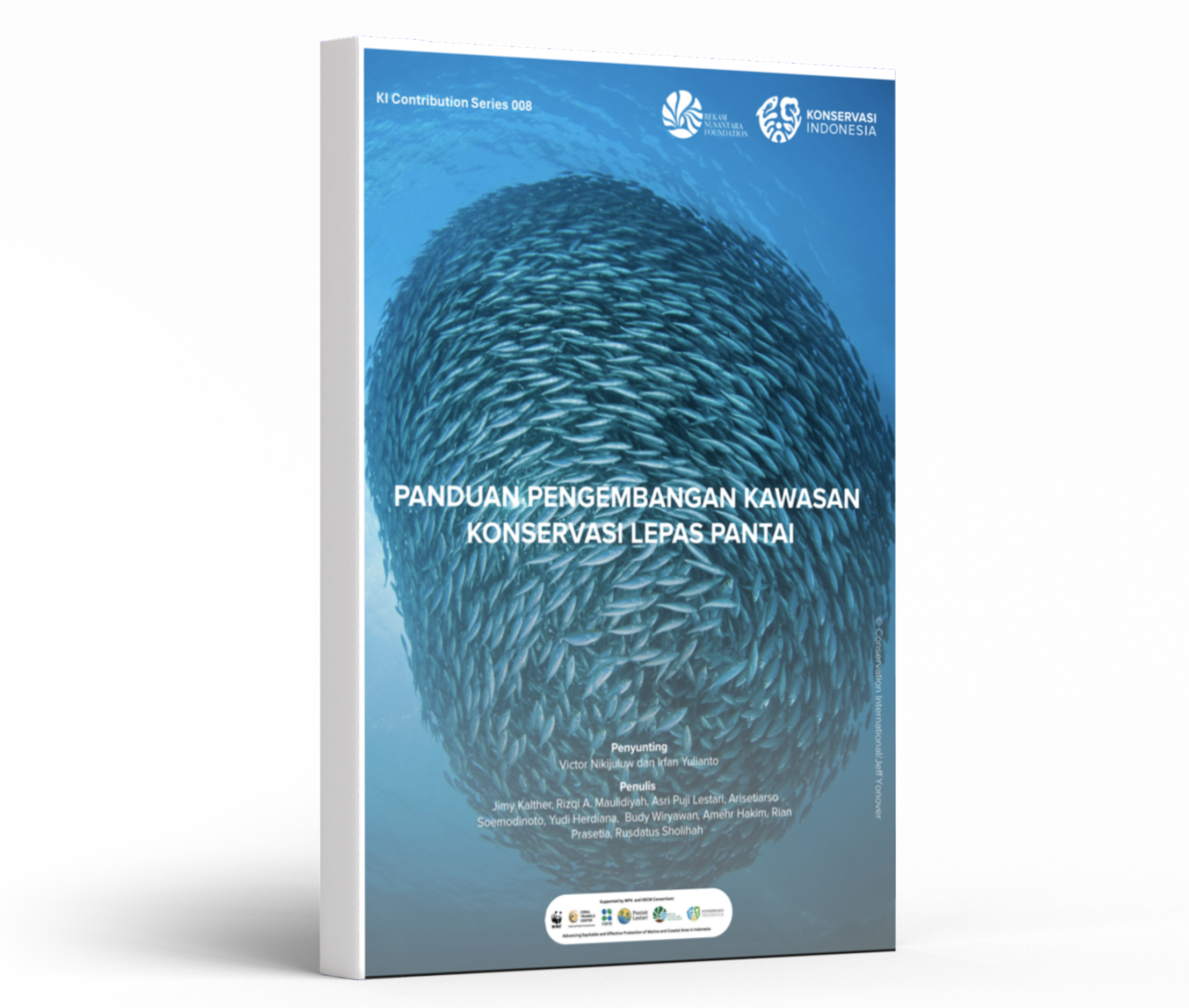
CTC-CFF Thematic Alignment
- Marine Protected Area (MPA)
- Ecosystems Approach to Fisheries Management (EAFM)
Geographic Scope
- Solomon Islands
- Philippines
- Indonesia
- Papua New Guinea
- Timor-Leste
- Malaysia
Content Language(s)
- Bahasa Indonesia
Introduction/Context
Overview:
This knowledge product provides a comprehensive and structured guideline for the development of offshore marine conservation areas, designed to support policymakers, practitioners, and conservation stakeholders in planning, establishing, and managing offshore protected areas effectively.
Background:
Indonesia, as the world’s largest archipelagic nation, hosts one of the richest marine biodiversities globally. However, increasing pressures from overfishing, habitat degradation, climate change, and expanding marine industries have placed offshore ecosystems -- particularly pelagic and deep-sea environments -- at significant risk. Historically, conservation efforts have been concentrated in coastal and nearshore areas, leaving offshore ecosystems underrepresented despite their ecological importance for migratory species, carbon storage, and fisheries productivity.
At the same time, Indonesia has committed to global biodiversity targets, including the 30x30 initiative, requiring the expansion and effective management of marine conservation areas. This creates an urgent need for clear, science-based, and operational guidance.
Problem statement:
There is currently a gap in practical, integrated guidance for offshore conservation planning and management that alligns ecological priorities with governance frameworks and stakeholders engagement. Without such guidance, conservation efforts risk being fragmented, ineffective, or unsustainable. This guideline addresses that gap by providing a step-by-step framework that integrates science, policy, and community engagement.
Specific location
Indonesia (national scope with applicability across Coral Triangle countries)
Geographical detail
Offshore marine ecosystems including pelagic zones, deep-sea habitats and areas within and beyond Exclusive Economic Zones (EEZs)
Scale
National-level framework adaptable to site-level implementation across multiple seascapes
Success factors:
Critical challenges:
Limited ecological data in offshore environments and complex multi-jurisdictional governance structures.
The Breakthrough:
Integration of global scientific frameworks with national policy and participatory stakeholder engagement created a practical and scalable model.
Success factors:
- Strong alignment with national and global policy frameworks
- Inclusive stakeholder engagement from early stages
- Robust scientific and spatial data foundation
- Clear governance and institutional arangements
- Long-term financing strategies
Result snapshots:
Improved framework for expanding offshore conservation coverage and supporting biodiversity protection aligned with global targets
Transferable tips:
Start with pilot sites to test and refine the approaches
Ensure early stakeholder buy-in to build ownership.
Allocate sufficient resources for data collection and monitoring.
Align conservation planning with national development priorities.
Limited ecological data in offshore environments and complex multi-jurisdictional governance structures.
The Breakthrough:
Integration of global scientific frameworks with national policy and participatory stakeholder engagement created a practical and scalable model.
Success factors:
- Strong alignment with national and global policy frameworks
- Inclusive stakeholder engagement from early stages
- Robust scientific and spatial data foundation
- Clear governance and institutional arangements
- Long-term financing strategies
Result snapshots:
Improved framework for expanding offshore conservation coverage and supporting biodiversity protection aligned with global targets
Transferable tips:
Start with pilot sites to test and refine the approaches
Ensure early stakeholder buy-in to build ownership.
Allocate sufficient resources for data collection and monitoring.
Align conservation planning with national development priorities.
Institution:
Konservasi Indonesia
email : -
website : konservasi-id.org/