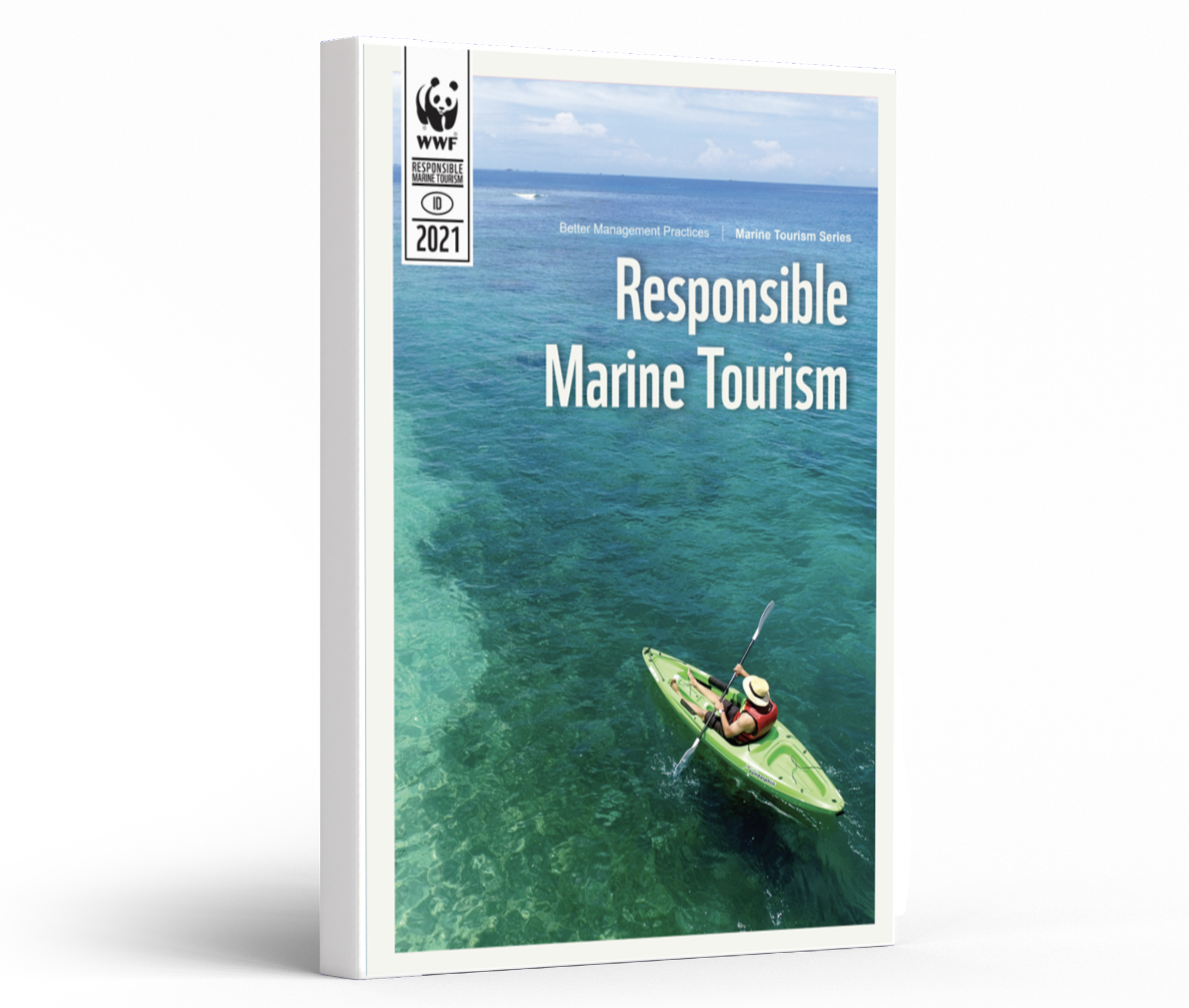
Responsible Marine Tourism
CTC-CFF Thematic Alignment
- Ecosystems Approach to Fisheries Management (EAFM)
- Marine Protected Area (MPA)
- Climate change
Geographic Scope
- Philippines
- Timor-Leste
- Malaysia
- Indonesia
- Papua New Guinea
- Solomon Islands
Content Language(s)
- Bahasa Indonesia
- English
Introduction/Context
Overview:
developed by WWF-Indonesia provides comprehensive practical guidance for sustainable and responsible marine tourism activities in Indonesia and the wider Coral Triangle region. The document promotes environmentally responsible tourism practices while balancing ecological conservation, socio-cultural respect, community participation and sustainable business management.
Background:
Indonesia’s marine tourism sector continues to grow rapidly due to the country’s extensive marine biodiversity, coral reefs, marine wildlife, and coastal attractions. However, increasing tourism pressure can negatively impact marine ecosystems, wildlife, coral reefs, water quality, and local communities if tourism is poorly managed. Unsustainable tourism activities such as irresponsible diving, wildlife disturbance, improper waste dispocal and unmanaged tourism development can threaten ecosystem helath and long-term tourism sustainability.
Problem statement:
Marine tourism activities often lack consistent environmental standards, responsible tourism practices and adequate awareness among tourism operators and tourists. Without clear operational guidance, tourism activities can contribute to habitat degradation, wildlife disturbance, pollution, overfishing and socio-cultural impacts on coastal communities. The BMP was developed to address these challenges by providing practical, field-based guidance for sustainable marine tourism management.
Specific location
Indonesia, with relevance across the Coral Triangle region
Geographical detail
Marine tourism destination including coral reef ecosystems, coastal areas, marine protected areas, whale shark aggregation sites, mangrove ecosystems, turtle nesting beaches, and small island tourism destinations.
Scale
National-level guidance applicable across marine tourism operators, conservation areas, tourism destinations, local communities, and tourism stakeholders throughout Indonesia and adaptable to the Coral Triangle region.
Structure:
Introduce responsible marine tourism principles
Introduce environmental, socio-cultural, and sustainable business management principles for marine tourism activities
Promote environmentally friendly tourism practices
Provide operational guidance for diving, snorkeling, recreational fishing, recreational boating and marine wildlife tourism activities.
Strenghten marine wildlife protection measures
Establish codes of conduct for observing and interacting with marine mammals, whale sharks, manta rays, turtles, seabirds, and dugongs.
Improve tourism operator responsibilities
Guide tour operators on safety procedures, waste management, emergency response, legal compliance, conservation awareness, and visitor education
Enhance tourist awareness and behavior
Educate tourists on environmentally responsible behavior, conservation area regulations, wildlife interaction ethich and sustainable tourism choices
Integrate hygiene, health and safety standards
Apply health protocols, emergency procedures, sanitation practices, and safety measures for tourism operations and recreational boats
Support community participation and local livelihoods
Encourage tourism activities that respect lcal culture, strengthen local economies, support community products, and involve local communities in tourism management.
Promote disability-friendly tourism principles
Improve accessibility and inclusive tourism infrastructure for persons with disabilities
Strengthen conservation education and advocacy
Use tourism activities to increase awareness, support conservation campaigns, and promote marine ecosystem protection
Share lessons learned and best practices
Document field experiences and case studies from whale shark tourism, dugong tourism, turtle conservation tourism and marine protected are
Introduce environmental, socio-cultural, and sustainable business management principles for marine tourism activities
Promote environmentally friendly tourism practices
Provide operational guidance for diving, snorkeling, recreational fishing, recreational boating and marine wildlife tourism activities.
Strenghten marine wildlife protection measures
Establish codes of conduct for observing and interacting with marine mammals, whale sharks, manta rays, turtles, seabirds, and dugongs.
Improve tourism operator responsibilities
Guide tour operators on safety procedures, waste management, emergency response, legal compliance, conservation awareness, and visitor education
Enhance tourist awareness and behavior
Educate tourists on environmentally responsible behavior, conservation area regulations, wildlife interaction ethich and sustainable tourism choices
Integrate hygiene, health and safety standards
Apply health protocols, emergency procedures, sanitation practices, and safety measures for tourism operations and recreational boats
Support community participation and local livelihoods
Encourage tourism activities that respect lcal culture, strengthen local economies, support community products, and involve local communities in tourism management.
Promote disability-friendly tourism principles
Improve accessibility and inclusive tourism infrastructure for persons with disabilities
Strengthen conservation education and advocacy
Use tourism activities to increase awareness, support conservation campaigns, and promote marine ecosystem protection
Share lessons learned and best practices
Document field experiences and case studies from whale shark tourism, dugong tourism, turtle conservation tourism and marine protected are
Success factors:
Strong integration of conservation and tourism objectives
Practical field-based guidance and case studies
Clear codes of conduct for tourism operators and tourists
Stakeholder collaboration between communities, government, NGOs, and tourism operators
Adaptive and replicable tourism management approaches
Practical field-based guidance and case studies
Clear codes of conduct for tourism operators and tourists
Stakeholder collaboration between communities, government, NGOs, and tourism operators
Adaptive and replicable tourism management approaches
Critical challenges:
Balancing increasing tourism demand with marine ecosystem protection and ensuring responsible behavior among tourism operators and tourists.
The Breakthrough:
The development of clear, practical, and user-friendly tourism best management practices that combine conservation principles, tourism management, and community participation into one operational guide
Success factors:
Strong conservation foundation
Practical operational guidance
Community engagement and stakeholder collaboration
Wildlife protection protocols
Integration of safety, hygiene and environmental principles
Result snapshots:
Improved awareness and guidance for sustainable marine tourism practices, wildlife interaction management, tourism safety, and community-based tourism approaches.
Transferable tips:
Practical tip #1
Develop clear tourism codes of conduct before tourism activities expand
Practical tip #2
Integrate conservation education directly into tourism operators and visitor experiences
Practical tip #3
Strengthen collaboration between tourism operators, local communities, conservation agencies and government institutions.
Balancing increasing tourism demand with marine ecosystem protection and ensuring responsible behavior among tourism operators and tourists.
The Breakthrough:
The development of clear, practical, and user-friendly tourism best management practices that combine conservation principles, tourism management, and community participation into one operational guide
Success factors:
Strong conservation foundation
Practical operational guidance
Community engagement and stakeholder collaboration
Wildlife protection protocols
Integration of safety, hygiene and environmental principles
Result snapshots:
Improved awareness and guidance for sustainable marine tourism practices, wildlife interaction management, tourism safety, and community-based tourism approaches.
Transferable tips:
Practical tip #1
Develop clear tourism codes of conduct before tourism activities expand
Practical tip #2
Integrate conservation education directly into tourism operators and visitor experiences
Practical tip #3
Strengthen collaboration between tourism operators, local communities, conservation agencies and government institutions.
Institution:
World Wildlife Fund (WWF)
email : info@wwf.org
website : wwf.org/