Module 5: Sustainable Practices in Conservation Partnerships
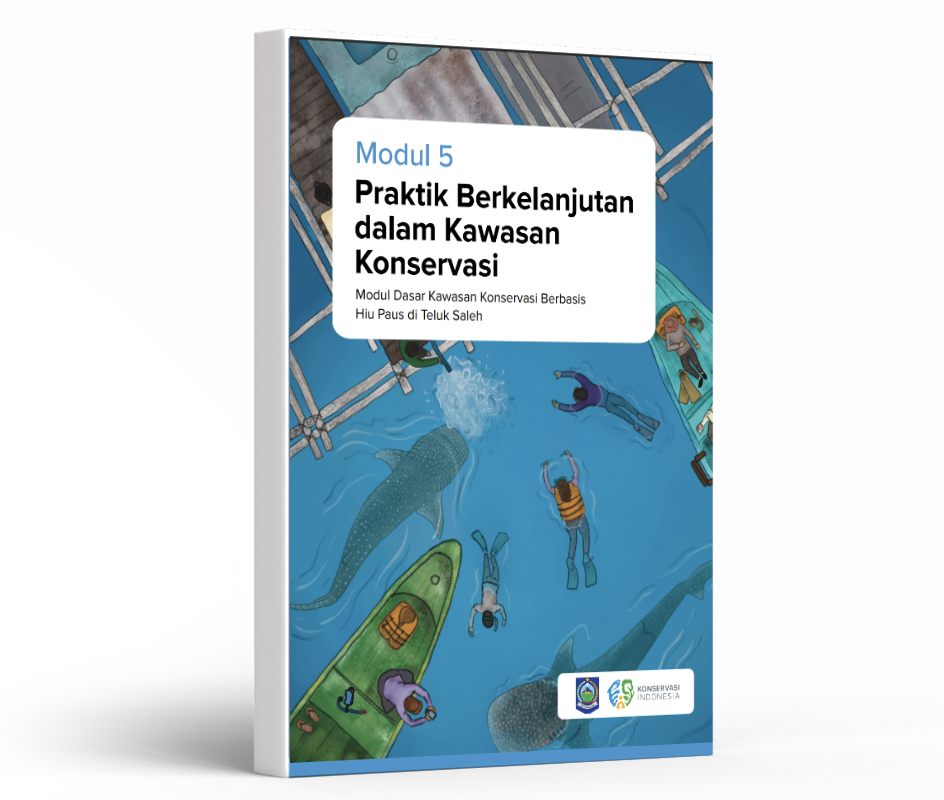
CTC-CFF Thematic Alignment
- Community-Based Coastal Resource Management (CBCRM)
- Tourism Management
- Threatened Species
- Marine Protected Area (MPA)
Geographic Scope
- Indonesia
Content Language(s)
- Bahasa Indonesia
Introduction/Context
Overview:
The module provides a comprehensive framework for balancing ecotourism and local fisheries, detailing actionable guidelines such as safe tourist interaction distances, visitor capacity limits, and proper bypass mitigation techniques to safely release incidentally caught whale sharks from fishing nets (bagan). Ultimately, this resource aims to guide managers, operators, and coastal communities in minimizing negative impacts on marine habitats while ensuring long-term socioeconomic benefits and ecological balance for future generations
Background:
Marine conservation areas often include tourism and fisheries sectors that provide important economic benefits to local communities. However, unsustainable practices can negatively impact marine ecosystems, biodiversity, and vulnerable species such as whale sharks. Sustainable management approaches are necessary to balance conservation objectives with local livelihoods and economic development
Problem statement:
Unsustainable tourism and fisheries practices can contribute to habitat degradation, overfishing, bycatch incidents, pollution, and disturbance to whale sharks and marine ecosystems. This module addresses the need for practical guidance and awareness-building on sustainable practices within marine conservation areas.
Specific location
Teluk Saleh, Sumbawa, West Nusa Tenggara, Indonesia
Geographical detail
Marine conservation areas, whale shark aggregation sites, fisheries areas, and tourism zones within Teluk Saleh.
Scale
Applicable to local conservation management and transferable across the Coral Triangle.
Structure:
1. Introduce sustainability concepts and principles
Explain sustainability as meeting present needs without compromising future generations, and introduce its application within tourism, fisheries, and marine conservation.
2. Promote sustainable tourism practices and visitor management
Introduce tourism approaches that balance environmental, social, and economic considerations while minimizing impacts on whale sharks and marine ecosystems.
3. Develop whale shark interaction guidelines and code of conduct
Apply safe interaction protocols such as maintaining distance, prohibiting touching or feeding, limiting boat proximity, and resticting visitor numbers to reduce stress on whale sharks.
4. Conduct visitor education and awareness activities
Provide pre-activity briefings, posters, brochures, and information boards to improve tourist understanding of responsible whale shark tourism practices.
5. Implement tourism carrying capacity measures
Asses and regulate the number of visitors, boats, and tourism activities allowed in shale shark tourism areas to prevent overcrowding and environmental impacts.
6. Promote sustainable fisheries management
Introduce sustainable fishing principles that support long-term fish stocks, habitat protection, food security, and recuded environmental impacts.
7. Reduce whale shark bycatch incidents with handling and release techniques
Implement mitigation mesures such as restricting certain fishing gear and activities in important whale shark habitats to reduce accidental capture.
9. Stengthen stakeholder collaboration and co-management with decision-making exercise
Encourage cooperation among tourism operators, fishers, local communities, and government agencies to support sustainable management and shared conservation goals.
Explain sustainability as meeting present needs without compromising future generations, and introduce its application within tourism, fisheries, and marine conservation.
2. Promote sustainable tourism practices and visitor management
Introduce tourism approaches that balance environmental, social, and economic considerations while minimizing impacts on whale sharks and marine ecosystems.
3. Develop whale shark interaction guidelines and code of conduct
Apply safe interaction protocols such as maintaining distance, prohibiting touching or feeding, limiting boat proximity, and resticting visitor numbers to reduce stress on whale sharks.
4. Conduct visitor education and awareness activities
Provide pre-activity briefings, posters, brochures, and information boards to improve tourist understanding of responsible whale shark tourism practices.
5. Implement tourism carrying capacity measures
Asses and regulate the number of visitors, boats, and tourism activities allowed in shale shark tourism areas to prevent overcrowding and environmental impacts.
6. Promote sustainable fisheries management
Introduce sustainable fishing principles that support long-term fish stocks, habitat protection, food security, and recuded environmental impacts.
7. Reduce whale shark bycatch incidents with handling and release techniques
Implement mitigation mesures such as restricting certain fishing gear and activities in important whale shark habitats to reduce accidental capture.
9. Stengthen stakeholder collaboration and co-management with decision-making exercise
Encourage cooperation among tourism operators, fishers, local communities, and government agencies to support sustainable management and shared conservation goals.
Success factors:
1. Strong stakeholder collaboration
2. Clear tourism and fisheries management guidelines
3. Community participation and livelihood integration
4. Effective visitor education and awareness
5. Interactive and practical learning methods
2. Clear tourism and fisheries management guidelines
3. Community participation and livelihood integration
4. Effective visitor education and awareness
5. Interactive and practical learning methods
Critical challenges:
Balancing tourism growth, fisheries livelihoods, and whale shark conservation within shared marine spaces.
The Breakthrough:
Integrating sustainable tourism management, fisheries mitigation measures, and community participation strengthened both conservation awareness and local economic opportunities.
Success factors:
1. Clear interaction guidelines and carrying capacity measures
2. stakeholder participation and co-management
3. Education and awareness-building
4. practical mitigation measures for fisheries impacts
Result snapshots:
Improved participant understanding of sustainable tourism, sustainable fisheries, whale shark protection and collaborative approaches.
Balancing tourism growth, fisheries livelihoods, and whale shark conservation within shared marine spaces.
The Breakthrough:
Integrating sustainable tourism management, fisheries mitigation measures, and community participation strengthened both conservation awareness and local economic opportunities.
Success factors:
1. Clear interaction guidelines and carrying capacity measures
2. stakeholder participation and co-management
3. Education and awareness-building
4. practical mitigation measures for fisheries impacts
Result snapshots:
Improved participant understanding of sustainable tourism, sustainable fisheries, whale shark protection and collaborative approaches.
Institution:
Konservasi Indonesia
email : -
website : konservasi-id.org/