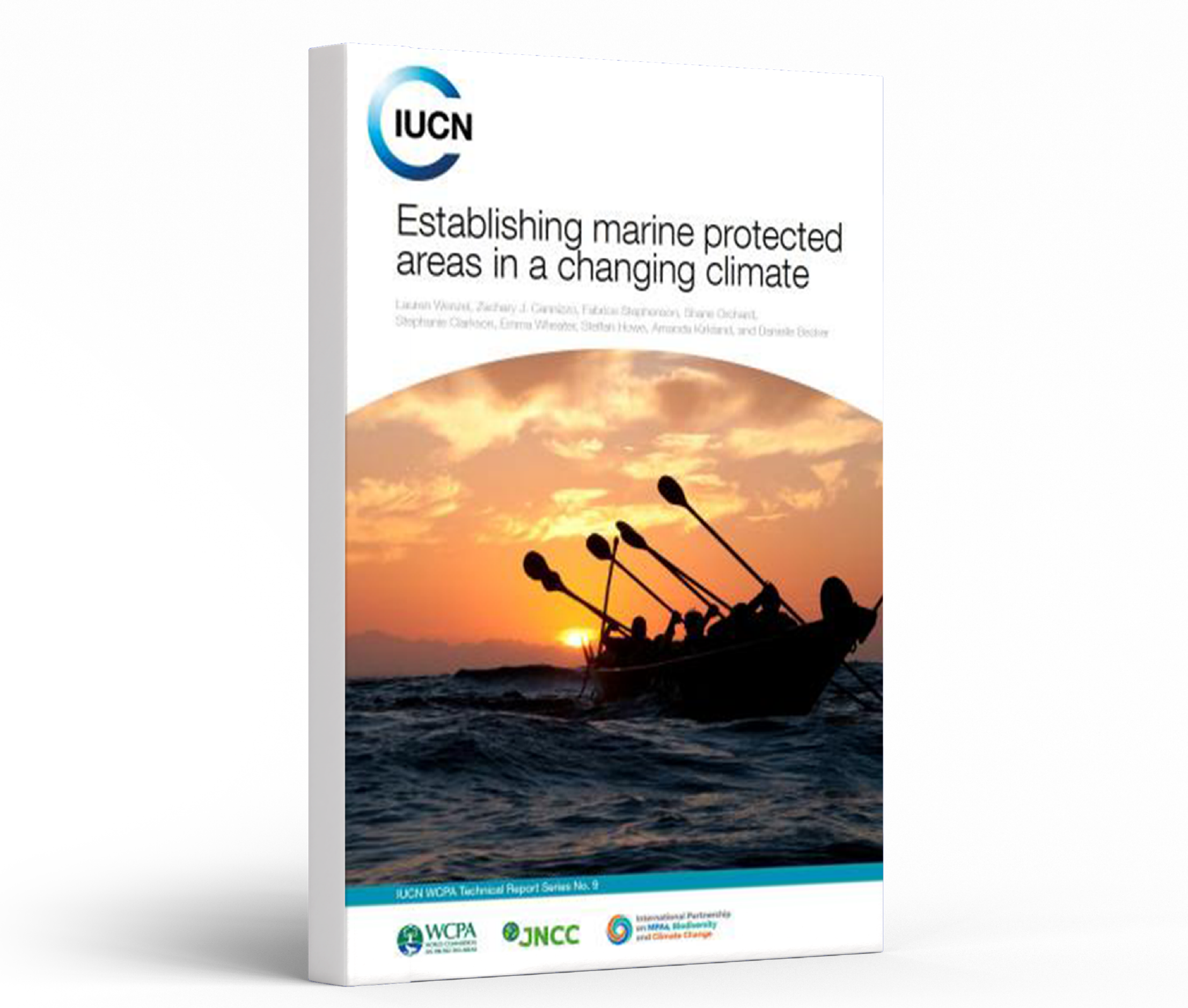
Establishing marine protected areas in a changing climate
CTC-CFF Thematic Alignment
- Marine Protected Area (MPA)
Geographic Scope
- Timor-Leste
- Indonesia
- Solomon Islands
- Papua New Guinea
- Malaysia
- Philippines
Content Language(s)
- English
Introduction/Context
Overview:
Establishing Marine Protected Areas in a Changing Climate is a technical guidance publication developed by the International Union for Conservation of Nature (IUCN) World Commission on Protected Areas (WCPA). The publication provides practical guidance for governments, conservation practitioners, Indigenous Peoples, local communities, and marine resource managers on how to establish and expand Marine Protected Areas (MPAs) that remain effective under changing climate conditions.
Background:
Marine ecosystems are increasingly affected by climate change through rising sea temperatures, ocean acidification, sea-level rise, marine heatwaves, and shifting species distributions. Global conservation targets require climate-informed marine conservation approaches.
Problem statement:
Many existing and proposed MPAs may become less effective if climate change impacts are not considered during planning and implementation.
Geographical detail
Applicable across coral reefs, mangroves, seagrass meadows, coastal wetlands, offshore habitats, pelagic ecosystems, and deep-sea environments.
Scale
International, regional, national, and local scales.
Structure:
Step 1: Understand current and future climate change impacts.
Step 2: Conduct ecological, social, and governance assessments.
Step 3: Establish climate-smart conservation objectives.
Step 4: Design climate-resilient MPAs.
Step 5: Strengthen stakeholder participation.
Step 6: Integrate equity and inclusivity.
Step 7: Implement adaptive management.
Step 8: Generate biodiversity, climate, and livelihood co-benefits.
Step 2: Conduct ecological, social, and governance assessments.
Step 3: Establish climate-smart conservation objectives.
Step 4: Design climate-resilient MPAs.
Step 5: Strengthen stakeholder participation.
Step 6: Integrate equity and inclusivity.
Step 7: Implement adaptive management.
Step 8: Generate biodiversity, climate, and livelihood co-benefits.
Success factors:
Strong scientific evidence, adaptive management, stakeholder engagement, integration of Indigenous knowledge, and climate-informed planning.
Critical challenges:
1. Climate uncertainty and ecosystem change.
2. Limited integration of climate considerations into traditional MPA planning.
The Breakthrough:
Recognition that climate resilience, biodiversity conservation, and community benefits must be addressed simultaneously.
Success factors:
1. Climate-smart planning.
2. Ecological connectivity.
3. Stakeholder engagement.
4. Continuous monitoring.
5. Scientific and traditional knowledge integration.
Transferable tips:
1. Integrate climate projections early.
2. Design MPA networks.
3. Protect climate refugia.
4. Establish robust monitoring.
5. Engage communities from the outset.
1. Climate uncertainty and ecosystem change.
2. Limited integration of climate considerations into traditional MPA planning.
The Breakthrough:
Recognition that climate resilience, biodiversity conservation, and community benefits must be addressed simultaneously.
Success factors:
1. Climate-smart planning.
2. Ecological connectivity.
3. Stakeholder engagement.
4. Continuous monitoring.
5. Scientific and traditional knowledge integration.
Transferable tips:
1. Integrate climate projections early.
2. Design MPA networks.
3. Protect climate refugia.
4. Establish robust monitoring.
5. Engage communities from the outset.
Institution:
The International Union for Conservation of Nature (IUCN)
email : -
website : iucn.org/