Manual Module 6: Conservation Strategies for Whale Shark Protection
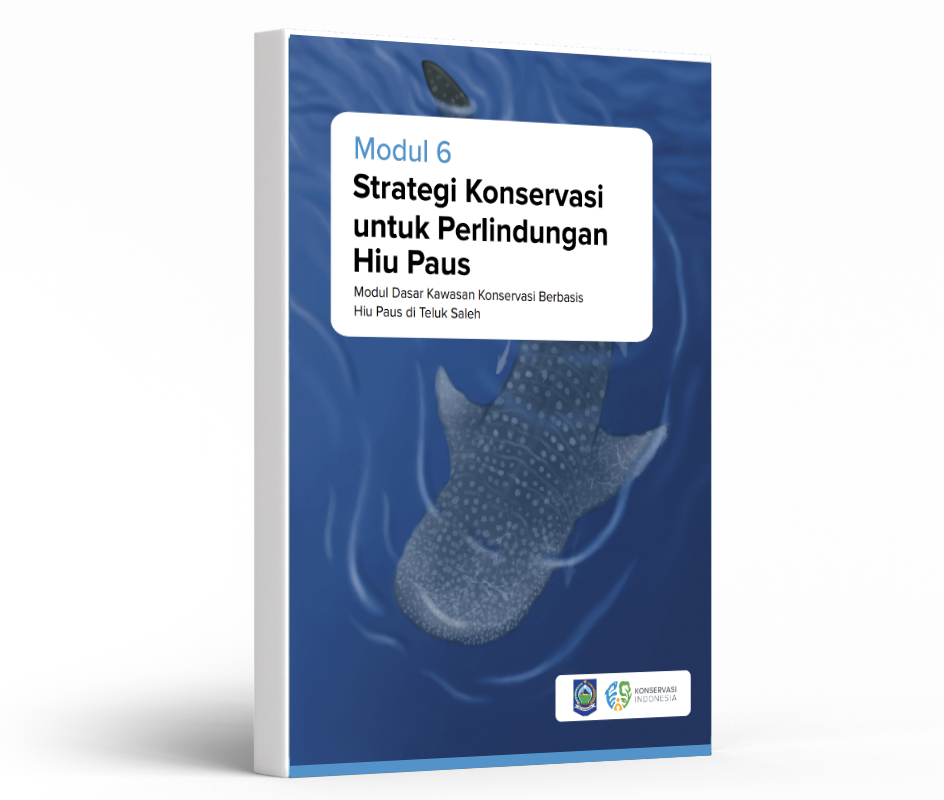
CTC-CFF Thematic Alignment
- Threatened Species
- Community-Based Coastal Resource Management (CBCRM)
- Marine Protected Area (MPA)
Geographic Scope
- Indonesia
Content Language(s)
- Bahasa Indonesia
Introduction/Context
Overview:
The module provides a strategic roadmap for adopting a focal-species-based protection approach, detailing international legal instruments alongside provincial regulations such as Peraturan Gubernur NTB No. 100/2023, and analyzing global management success stories from Australia, Mexico, and Tanzania. Ultimately, this resource aims to guide managers, operators, and coastal communities in applying adaptive management principles and flexible zoning strategies to effectively minimize environmental pressures on this umbrella species while securing long-term ecological resilience and sustainable socioeconomic development
Background:
Whale sharks are highly migratory and vulnarable marine species with important ecological and social roles in marine ecosystems. Their conservation requires coordinated protection across habitats, migration corridors, and governance systems. Conservation efforts therefore need to combine science-based planning, effective management, legal protection, stakeholder participation, and adaptive approaches that respond to ecological and social changes over time.
The module draws lessons from international whale shark conservation initiatives in countries such as Mexico, Australia, Tanzania, and the Phillipines, while also introducing national and local consercation regulations relevant to Indonesia and Teluk Saleh.
Problem statement:
Whale sharks face increasing threats from unsustainable tourism, fisheries interactions, habitat degradation, vessel traffic, pollution, and weak management coordination. Effective whale shark conservation requires integrated strategies that balance ecological protection with local livelihoods, tourism and fisheries activities.
Specific location
Teluk Saleh, Sumbawa, West Nusa Tenggara, Indonesia
Geographical detail
Marine conservation areas, whale shark aggregation sites, fisheries areas, migration corridors, and coastal ecosystems within the Teluk Saleh conservation landscape.
Scale
Training module designed for local implementation with relevance across whale shark conservation initiatives in the Coral Triangle region.
Structure:
1. Introduce whale shark conservation concepts
Explain sthe ecological importance, migratory behavior, and conservation needs of whale sharks.
2. Review international, national and local regulations
Introduce legal frameworks such as UNCLOS, CMS, CITES, CBD, Indonesian national regulations and local governance initiatives supporting whale shark protection.
3. Analyze global whale shark conservation case studies
Review conservation examples from Mexico, Australia, Tanzania, and the Phillipines to identify successful approaches and lessons learned.
4. Introduce focal species-based conservation areas
Explain how whale sharks can function as focal, umbrella, and flagship species supporting broader ecosystem conservation.
5. Identify key habitat and ecological requirements
Assess critical habitats including aggregation sites, feeding areas, nursery grounds, and migration corridors.
6. Design conservation areas and zoning systems
Develop conservation area designs considering ecological connectivity, habitat protection, zoning and human activities.
7. Integrate scientific and socio-economic data
Use ecological and socio-economic information to support evidence-based planning and management
8. Strengthen stakeholder engagement and collaboration
Engage local communities, tourism operators, fisheries sectors, NGOs, researchers, and government agencies in conservation planning.
9. Apply adaptive management approaches
Implement monitoring, evaluation, rezonasi (rezoning), and flexible management responses based on changing conditions
10. Develop strategic conservation action plans
Facilitate participatory planning exercises to identify threats, set conservation goals, define actions, and establish implementation timelines.
Explain sthe ecological importance, migratory behavior, and conservation needs of whale sharks.
2. Review international, national and local regulations
Introduce legal frameworks such as UNCLOS, CMS, CITES, CBD, Indonesian national regulations and local governance initiatives supporting whale shark protection.
3. Analyze global whale shark conservation case studies
Review conservation examples from Mexico, Australia, Tanzania, and the Phillipines to identify successful approaches and lessons learned.
4. Introduce focal species-based conservation areas
Explain how whale sharks can function as focal, umbrella, and flagship species supporting broader ecosystem conservation.
5. Identify key habitat and ecological requirements
Assess critical habitats including aggregation sites, feeding areas, nursery grounds, and migration corridors.
6. Design conservation areas and zoning systems
Develop conservation area designs considering ecological connectivity, habitat protection, zoning and human activities.
7. Integrate scientific and socio-economic data
Use ecological and socio-economic information to support evidence-based planning and management
8. Strengthen stakeholder engagement and collaboration
Engage local communities, tourism operators, fisheries sectors, NGOs, researchers, and government agencies in conservation planning.
9. Apply adaptive management approaches
Implement monitoring, evaluation, rezonasi (rezoning), and flexible management responses based on changing conditions
10. Develop strategic conservation action plans
Facilitate participatory planning exercises to identify threats, set conservation goals, define actions, and establish implementation timelines.
Success factors:
1. Strong stakeholder collaboration and participation
2. Science-based and adaptive management approaches
3. Integration of legal frameworks and local governance
4. Clear conservation objectives and zoning systems
5. Practical and participatory learning methods
6. Use of real-world conservation case studies
2. Science-based and adaptive management approaches
3. Integration of legal frameworks and local governance
4. Clear conservation objectives and zoning systems
5. Practical and participatory learning methods
6. Use of real-world conservation case studies
Critical challenges:
Balancing whale sharks conservation objectives with fisheries, tourism, coastal development, and local livelihood needs.
The Breakthrough:
Combining legal protection, focal species-based conservation, adaptive management, and stakeholder collaboration strengthened conservation planning and long-term management approaches.
Success factors:
1. Strong governance and legal frameworks
2. Stakeholder engagement and co-management
3. Science -based conservation planning
4. Adaptive management and monitoring systems
5. Integration of ecological and socio-economic considerations
Result snapshots:
Improved participant understanding of whale shark conservation strategies, focal species-based conservation areas, adaptive management and collaborative governance
Transferable tips:
1. Use whale sharks as flagship and umbrella species for broader conservation
2. Combine legal frameworks with local implementation
3. Apply adaptive management and regular monitoring
4. Integrate scientific and socio-economic data into planning
5. Strengthen collaboration across sectors and stakeholders
Balancing whale sharks conservation objectives with fisheries, tourism, coastal development, and local livelihood needs.
The Breakthrough:
Combining legal protection, focal species-based conservation, adaptive management, and stakeholder collaboration strengthened conservation planning and long-term management approaches.
Success factors:
1. Strong governance and legal frameworks
2. Stakeholder engagement and co-management
3. Science -based conservation planning
4. Adaptive management and monitoring systems
5. Integration of ecological and socio-economic considerations
Result snapshots:
Improved participant understanding of whale shark conservation strategies, focal species-based conservation areas, adaptive management and collaborative governance
Transferable tips:
1. Use whale sharks as flagship and umbrella species for broader conservation
2. Combine legal frameworks with local implementation
3. Apply adaptive management and regular monitoring
4. Integrate scientific and socio-economic data into planning
5. Strengthen collaboration across sectors and stakeholders
Institution:
Konservasi Indonesia
email : -
website : konservasi-id.org/