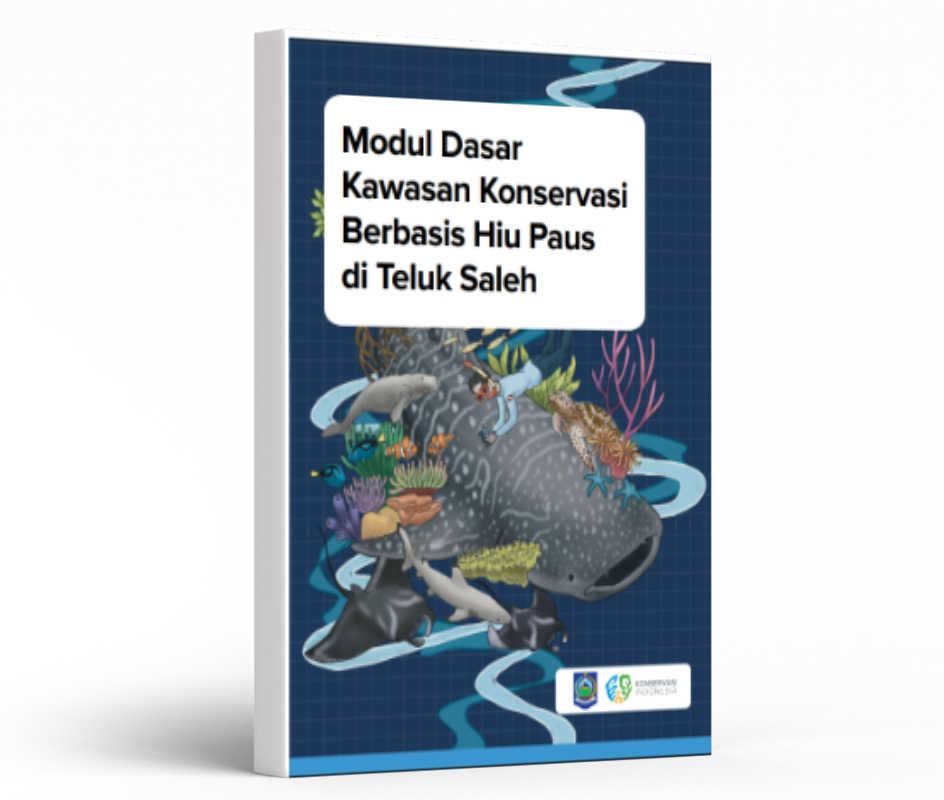
Introduction Module of Whale Shark-Based Conservation Area in Saleh Bay
CTC-CFF Thematic Alignment
- Community-Based Coastal Resource Management (CBCRM)
- Marine Protected Area (MPA)
- Threatened Species
Geographic Scope
- Indonesia
Content Language(s)
- Bahasa Indonesia
Introduction/Context
Overview:
This knowledge product presents a foundational training module on whale shark-based marine conservation in Teluk Saleh, Indonesia. It is designed to strenghthen the capacity of local stakeholders -- including government, communities, and tourism operators -- in managing conservation areas effectively while balancing ecological and socio-economic objectives.
Background:
Teluk Saleh, located in Sumbawa, Indonesia, is recognized for its rich marine biodiversity, including coral reefs, seagrass beds, and mahroves. It is also an important habitat for whale sharks (Rhincodon typus), the largest fish species globally. As described in the module (page 4), whale sharks play a critical ecological role and are a focal species for conservation and sustainable tourism. However, they face threats from bycatch, habitat degradation, and unmanaged tourism.
The module also reflects strong international and national collaboration (pages 5-6), highlighting how conservation can align with sustainable development and community livelihoods.
Problem statement:
There is a need for structured, accessible training tools to build stakeholder capacity in managing species-based conservation areas. Without this, conservation efforts risk being fragmented and ineffective. This module addresses that gap through an integrated learning framework.
Specific location
Teluk Saleh, Sumbawa, West Nusa Tenggara, Indonesia
Geographical detail
A coastal bay ecosystem with coral reefs, seagrass beds, mangroves, and pelagic waters supporting whale shark aggregation.
Scale
Site-level implementation with replication potential across the Coral Triangle.
Structure:
1. Capacity Needs Assessment;
2. Module Development (ecology, conservation, stakeholder roles);
3. Stakeholder Engagement;
4. Training Delivery (interactive learning);
5. Application in local management;
6. Monitoring & Evaluation (pre / post tests);
7. Scaling & Replication;
2. Module Development (ecology, conservation, stakeholder roles);
3. Stakeholder Engagement;
4. Training Delivery (interactive learning);
5. Application in local management;
6. Monitoring & Evaluation (pre / post tests);
7. Scaling & Replication;
Success factors:
Critical challenges:
- Tourism pressure
- Governance coordination
Success factors:
- Stakeholder collaboration
- Science-based approach
- Community engagement
Transferable tips:
? Use a flagship species
? Tailor the training
? Link Conservation to Livelihoods
- Tourism pressure
- Governance coordination
Success factors:
- Stakeholder collaboration
- Science-based approach
- Community engagement
Transferable tips:
? Use a flagship species
? Tailor the training
? Link Conservation to Livelihoods
Institution:
Konservasi Indonesia
email : -
website : konservasi-id.org/