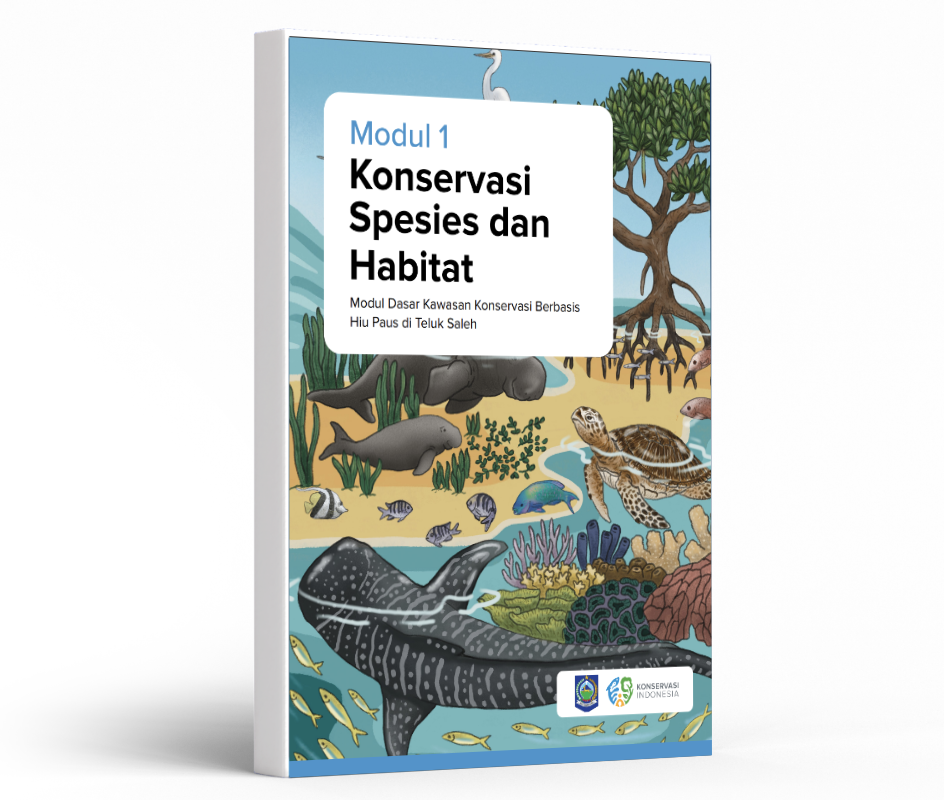
Module 1 : Conservation of Species and Habitats
CTC-CFF Thematic Alignment
- Threatened Species
- Community-Based Coastal Resource Management (CBCRM)
- Marine Protected Area (MPA)
- Protected Area Management Effectiveness (PAME)
Geographic Scope
- Indonesia
Content Language(s)
- Bahasa Indonesia
Introduction/Context
Overview:
This knowledge product presents Module 1: Species and Habitat Conservation, part of the foundational training series on marine conservation in Teluk Saleh, Indonesia. The module introduces essential ecological concepts and conservation principles, equipping stakeholders with the knowledge required to understand and protect marine ecosystems.
Background:
Indonesia is recognized as one of the world’s richest marine biodiversity regions, supporting millions of livelihoods. However, marine ecosystems are increasingly threathened by human activities and environmental changes. As highlighted in the module overview (page 5), conservation is essential to maintain ecological balance, protect biodiversity, and sustain ecosystem services that support human well-being.
This module serves as the conceptual foundation of the training series, covering ecosystem dynamics, ecological interactions, conservation principles, and threats to coastal ecosystems. It emphasizes the interdependence between species and habitats.
Problem statement:
Limited understanding of ecosystem functions and conservation principles among stakeholders can lead to unsustainable practices. This module addresses this gap through structured, practical, and interactive learning.
Specific location
Teluk Saleh, Sumbawa, West Nusa Tenggara, Indonesia
Geographical detail
A coastal ecosystem consisting of coral reefs, mangroves, seagrass beds, and open marine waters.
Scale
Applicable at site level with replication potential across the Coral Triangle region.
Structure:
1. Introduce ecosystem concepts and ecological interactions
Explain ecosystems as interconnected systems or organisms and their environment, including key ecological relationships (e.g. mutualism, predation) and factors influencing marine life.
2. Explain conservation principles
Introduce core concepts of species and habitat conservation, emphasizing their independence, protection of threatened species, critical habitats, and biodiversity
3. Explore ecosystem services
Highlight how ecosystem support human well-being through provisioning, regulating, supporting, and cultural services.
4. Identify key threats
Present major threats such as habitat degradation, pollution, overfishing, and climate change, with relevance to local contexts.
5. Apply learning through activities
Use interactive exercises and reflection to connect concepts to real-world situations and strenghen understanding.
6. Evaluate learning
Assess participant understanding through structured evaluations (e.g. quizzes, reflection, discussions).
Explain ecosystems as interconnected systems or organisms and their environment, including key ecological relationships (e.g. mutualism, predation) and factors influencing marine life.
2. Explain conservation principles
Introduce core concepts of species and habitat conservation, emphasizing their independence, protection of threatened species, critical habitats, and biodiversity
3. Explore ecosystem services
Highlight how ecosystem support human well-being through provisioning, regulating, supporting, and cultural services.
4. Identify key threats
Present major threats such as habitat degradation, pollution, overfishing, and climate change, with relevance to local contexts.
5. Apply learning through activities
Use interactive exercises and reflection to connect concepts to real-world situations and strenghen understanding.
6. Evaluate learning
Assess participant understanding through structured evaluations (e.g. quizzes, reflection, discussions).
Success factors:
Critical challenges:
- Translating theory into practice
- Diverse participant backgrounds
The Breakthrough:
- Strong foundational content
- Interactive learning approach
- Real-world relevance
Transferable tips:
? Use local case studies
? Keep sessions interactive
? Reinforce learning with evaluation
- Translating theory into practice
- Diverse participant backgrounds
The Breakthrough:
- Strong foundational content
- Interactive learning approach
- Real-world relevance
Transferable tips:
? Use local case studies
? Keep sessions interactive
? Reinforce learning with evaluation
Institution:
Konservasi Indonesia
email : -
website : konservasi-id.org/