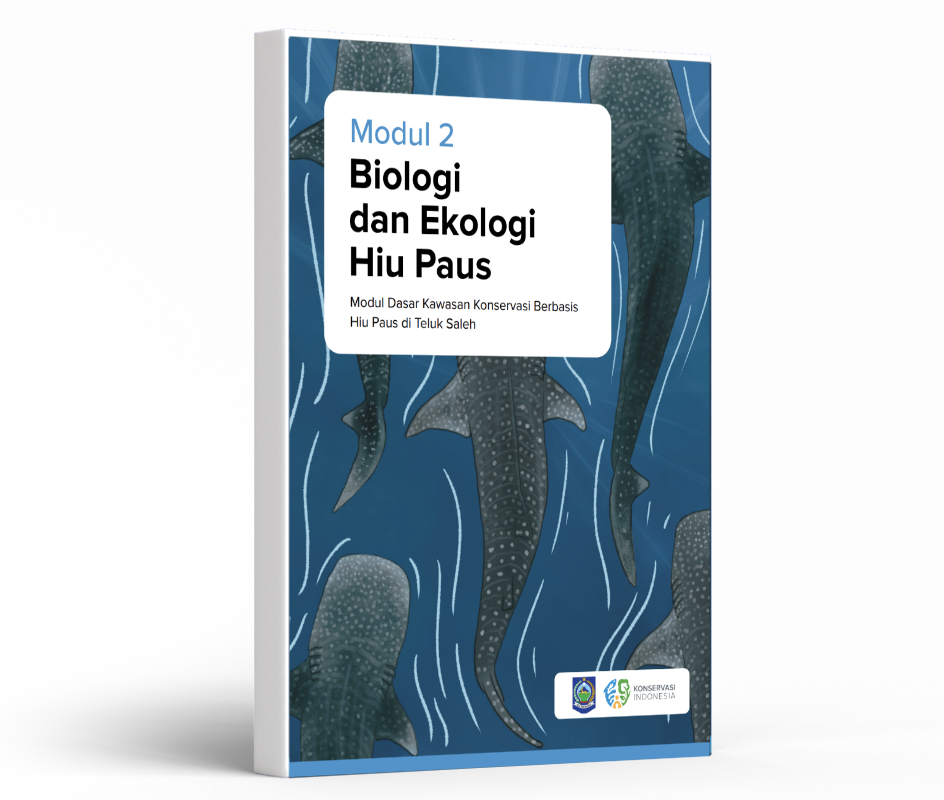
Module 2: Whale Shark Biology and Ecology
CTC-CFF Thematic Alignment
- Marine Protected Area (MPA)
- Threatened Species
- Community-Based Coastal Resource Management (CBCRM)
- Tourism Management
Geographic Scope
- Indonesia
Content Language(s)
- Bahasa Indonesia
Introduction/Context
Overview:
This knowledge product presents Module 2: Biology and Ecology of Whale Sharks, part of a structured training series on whale shark-based conservation in Teluk Saleh, Indonesia. The module provides essential scientific knowledge to support evidence-based conservation and management.
Background:
Whale sharks (Rhincodon typus) are the largest fish species in the world and play a critical ecological role in marine ecosystems. Despite their size, they are highly vulnarable due to slow growth, late maturity and increasing pressures from human activities. The module highlights their biological characteristics, ecological roles, and interactions with human systems, particularly fisheries and tourism
Problem statement:
Limited understanding of whale shark biology and ecology among stakeholders can hinder effective conservation. This module addresses this gap by providing structured, accessible knowledge to inform sustainable management and protection efforts.
Specific location
Teluk Saleh, Sumbawa, West Nusa Tenggara, Indonesia
Geographical detail
Coastal and pelagic marine ecosystems supporting whale shark aggregation and feeding.
Scale
Site-level application with strong relevance across the Coral Triangle region
Structure:
1. Introduce whale shark biology and characteristics
Present key biological features of whale sharks, including morphology, size, filter-feeding behaviour, and life cycle. Emphasize their slow growth, late maturity, amd high vulnerability due to low reproductive rates.
2. Understand behaviour, habitat and movement
Explain feeding strategies, habitat use (coastal and offshore), and long-distance migration patterns. Highlight how environmental factors such as food availability, currents, and temperature influence their distribution.
3. Explain ecological roles and importance
Describe the role of whale sharks in marine ecosystems, including their function in the food web, nutrient cycling, and their role as an umbrella species supporting broader biodiversity conservation.
4. Examine human interactions and socio-economic value
Explore interactions between whale sharks and human activities such as fisheries and tourism. Highlight both the ecological risks and the economic benefits, including their value for local livelihoods and ecotourism.
5. Identify key threats and conservation challenges
Identify major threats including bycatch, vessel strikes, commercial fishing, pollution, and unmanaged tourism. Explain how these pressures impact whale sharks health, behavior, and population trends.
6. Introduce management and protection measures
Outline key conservation strategies, including legal protection (national and international), action plans, and the establishment of conservation areas to support long-term species protection.
7. Apply learning through interactive exercises
Engage participants through activities such as concept mapping to analyze relationships between ecological and social factors affecting whale shark populations and conservation outcomes.
Present key biological features of whale sharks, including morphology, size, filter-feeding behaviour, and life cycle. Emphasize their slow growth, late maturity, amd high vulnerability due to low reproductive rates.
2. Understand behaviour, habitat and movement
Explain feeding strategies, habitat use (coastal and offshore), and long-distance migration patterns. Highlight how environmental factors such as food availability, currents, and temperature influence their distribution.
3. Explain ecological roles and importance
Describe the role of whale sharks in marine ecosystems, including their function in the food web, nutrient cycling, and their role as an umbrella species supporting broader biodiversity conservation.
4. Examine human interactions and socio-economic value
Explore interactions between whale sharks and human activities such as fisheries and tourism. Highlight both the ecological risks and the economic benefits, including their value for local livelihoods and ecotourism.
5. Identify key threats and conservation challenges
Identify major threats including bycatch, vessel strikes, commercial fishing, pollution, and unmanaged tourism. Explain how these pressures impact whale sharks health, behavior, and population trends.
6. Introduce management and protection measures
Outline key conservation strategies, including legal protection (national and international), action plans, and the establishment of conservation areas to support long-term species protection.
7. Apply learning through interactive exercises
Engage participants through activities such as concept mapping to analyze relationships between ecological and social factors affecting whale shark populations and conservation outcomes.
Success factors:
Critical challenges:
1. Data limitations on species behavior
2. Managing human-wildlife interactions
Success factors:
1. Strong scientific foundation
2. Clear linkage between ecology and management
3. Practical relevance to local context
4. Integration of conservation and livelihoods
Transferable tips:
1. Use flagship species to drive engagement
2. Link conservation to economic benefits
3. Adapt content to local contexts
1. Data limitations on species behavior
2. Managing human-wildlife interactions
Success factors:
1. Strong scientific foundation
2. Clear linkage between ecology and management
3. Practical relevance to local context
4. Integration of conservation and livelihoods
Transferable tips:
1. Use flagship species to drive engagement
2. Link conservation to economic benefits
3. Adapt content to local contexts
Institution:

Konservasi Indonesia
email : -
website : konservasi-id.org/